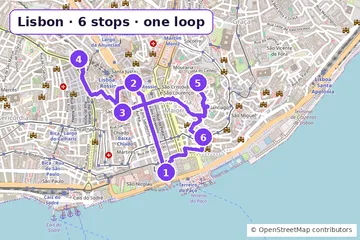
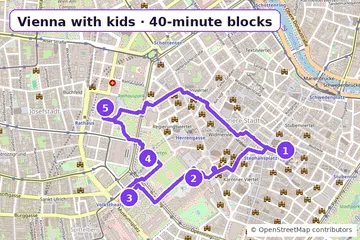
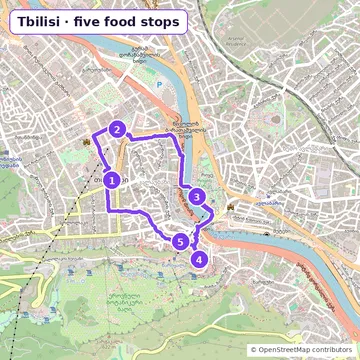
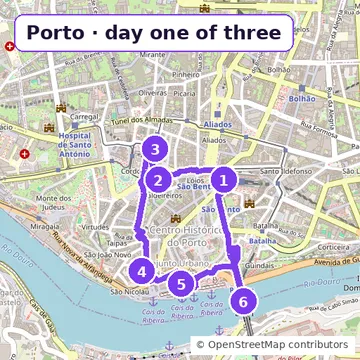
An AI itinerary breaks for three reasons: the model quotes opening hours from memory, its timings never add up, and it hands you a wall of chat text you cannot read at a crossing. All three are fixed in the prompt — make it verify hours for your exact date, force blocks plus transfers to equal the stated duration, and demand a document with working map links. Below: how each failure looks on the street, the nine lines that prevent it, the whole prompt to paste, and what still goes wrong afterwards.
Search for itinerary prompts and you get lists. Twenty prompts here, fifty there, eighty-four somewhere else. They are cheap to publish and they fail in the same place: none tells the model to check anything, and none asks for a file you can use with a phone in one hand and a coffee in the other. Below is one prompt. The nine constraints inside it are the point.
The door that is open on the website and shut in front of you
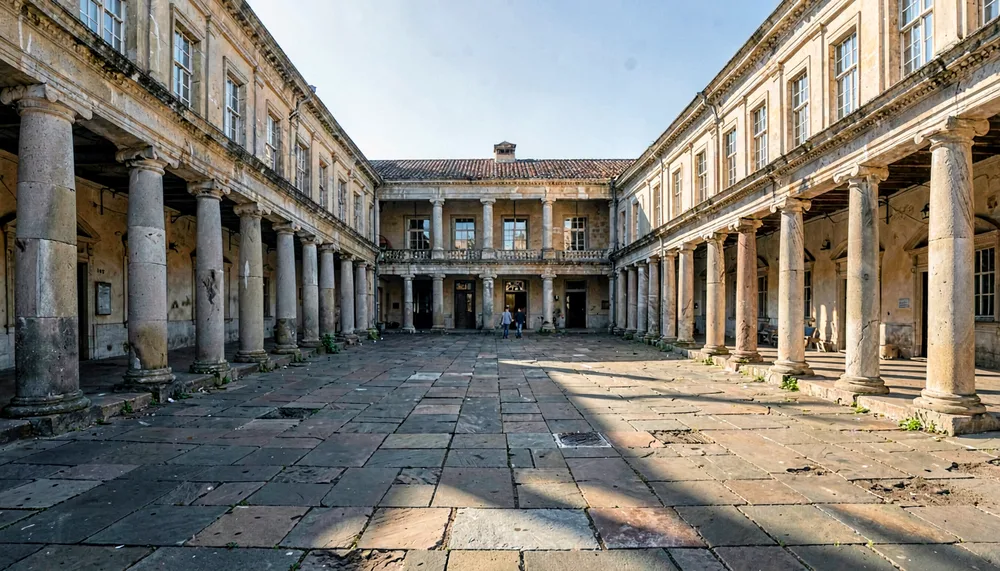
A line that reads 17:15 · Musée d'Orsay, 45 minutes looks perfectly sensible in a chat window. On the museum's own admission page the last admission is 17:00 and the galleries start closing at 17:30 (read 16 August 2026). You arrive at a desk that has stopped selling, holding a plan that still looks correct.
Every large venue publishes three different times; a model answering from memory knows only the first.
- Closing time. Printed everywhere, useless for planning.
- Last admission. Normally 30 to 60 minutes earlier. The Louvre's own hours page states last entry one hour before closing and clearing of rooms 30 minutes before.
- Last lift, last boat, last guided tour. Earlier again, and by more than you would guess. The Eiffel Tower's official page showed the tower open until midnight with last ascents at 22:45 — an hour and a quarter between "open" and "you can go up".
Then the weekday, which decides more than the hour does. The Louvre is closed on Tuesdays, the Musée d'Orsay on Mondays. A model that has not been told which day of the week you are there cannot catch that, and it will not ask. It will cheerfully build a Tuesday around a museum that is dark.
Then the rules no memory holds. The Louvre's page also says reservations are required for every visitor from 1 July to 31 August 2026, so in that window "walk in at 14:00 and buy a ticket" is not slightly wrong, it is a wasted afternoon. Every time quoted here was read on the venues' own pages on 16 August 2026 — which is exactly why the prompt tells the model to check them again for your date instead of trusting this page or its own memory.
The kitchen closes before the room does
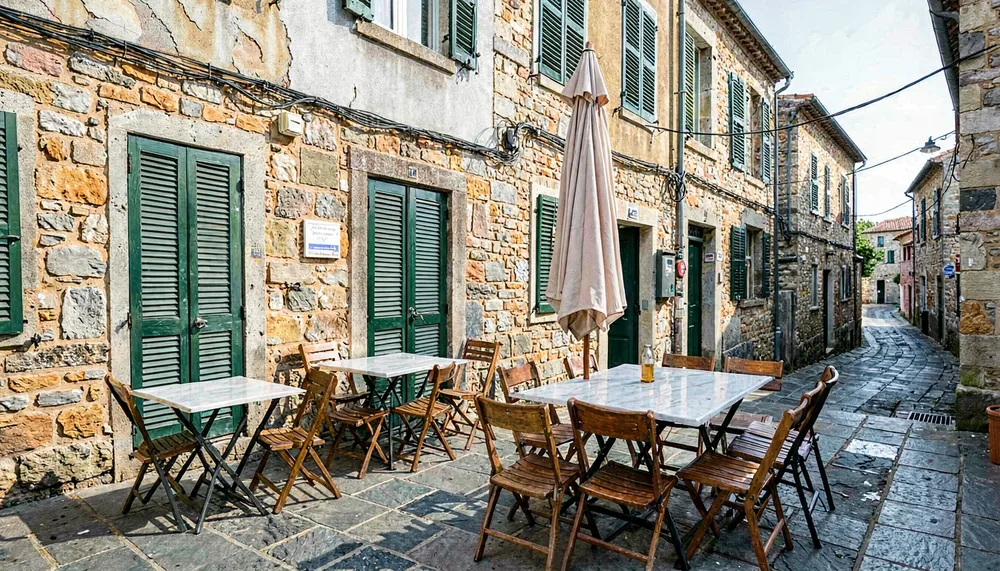
The second failure is food, and it bites from both sides. One way: the place everyone recommends serves dinner only, opens at 18:00, and the model has put it in your plan at 13:00. The other way is what happens across Spain, where restaurants commonly shut the kitchen between lunch and dinner, roughly 17:00 to 20:00, and dinner service does not properly begin until 21:00. A plan with dinner at 19:00 in Madrid seats you in an empty room, if the door opens at all.
Underneath both is one distinction the model blurs: the room's hours are not the kitchen's hours. A bar stays open long after the last order goes in. Ask for the kitchen.
Markets have their own version. Barcelona's Mercat de la Boqueria posts 08:00 to 20:30, Monday to Saturday, closed Sundays apart from a few dates it announces itself. Those are the building's hours; every trader inside keeps his own. Our working rule: put markets in the morning and never find out whose counter closed at four.
The arithmetic nobody did
Ask for "an eight-hour day" and you get six blocks that quietly sum to nine and a half, with the transfers between them counted as zero. By the third stop you are forty minutes behind and improvising.
We plan walking at 4 to 4.5 km/h. That is a working heuristic, not a measurement: crossings, photographs, a wrong turn out of a metro exit, the two minutes spent deciding whether that really is the entrance. Do the sum yourself. Six stops means five legs; at about 900 metres each that is 4.5 km. At 4.2 km/h it is 64 minutes of walking. At the 5 km/h a model assumes when it assumes anything, 54. Ten minutes is nothing — until you notice the day contains eight of those tens.
Three lines close the gap. Transfers go inside the blocks, so the plan pays for them. A buffer of 10 to 15 minutes sits somewhere named, not spread invisibly. And every block carries a cut line: what gets dropped first. Asked in advance, that is one sentence in a document. Asked at 16:40, with sore feet and someone who still wants the viewpoint, it is an argument.
A loop, not a zigzag
The classic AI route sends you east for the cathedral, west for lunch because that restaurant scored 4.8, then east again for the viewpoint. Nothing in it is wrong. You just walk the same street three times.
Our threshold is 300 metres: more backtracking than that and the stops get reordered. Three hundred is not a law of nature, just where you start recognising the same shop window and resenting it. Food goes where it falls on the route, not where the rating is highest — a restaurant twenty minutes off the line costs forty, and no dish is worth a block of the day.
The nine lines
- Check, don't recall. Every stop looked up before it is placed, with a source link behind the hours. No link means it did not check.
- Use the date. The weekday decides closing days; the date decides public holidays and seasonal rules such as compulsory reservation windows.
- Hours for the exact slot. Not "in general". The kitchen, not the room. Last admission, not closing time. Say plainly if a place is dinner only.
- Close the arithmetic. Blocks plus transfers equal the stated duration exactly, walking at 4 to 4.5 km/h, with total distance stated.
- Name the buffer. Ten to fifteen minutes, and say where it sits — a decision, not an accident.
- Name the cut. One line per block: what goes first if you are running late.
- Loop, not zigzag. More than 300 metres of backtracking means reorder.
- Count the transport out loud. In hours of programme, not minutes of travel.
- Never invent. "Check on site" instead of a plausible number, real links only, and an explicit line about what was cut to make the day fit.
The prompt, whole
Paste it unchanged and it builds a real Lisbon day — the values in brackets are defaults, not blanks you have to fill first. Replace them for your trip, and switch web search on before you send it.
Plan a walking day in [CITY: Lisbon] on [DATE: Thursday 24 September 2026],
[DURATION: 8 hours], starting and finishing at [START: a hotel near Rossio].
Pace: [PACE: moderate]. Must include: [MUST: one viewpoint and a sit-down lunch
of local food]. Leave out: [SKIP: anything needing a timed ticket booked weeks ahead].

Work to these nine rules.

1. Check, don't recall. Look every stop up before you place it; your memory of
hours and prices goes stale. Give the source link for each set of hours.

2. Use the date. State the weekday and check closing days against it - Monday and
Tuesday closures kill museum plans. Check public holidays for that date in that
city, and seasonal rules such as compulsory reservation periods.

3. Hours for the exact slot, not in general. For food, check the kitchen, not the
room: kitchens stop earlier. Say plainly if a place is dinner only. Last admission
is 30 to 60 minutes before closing, and a last lift or last boat is earlier again.

4. Close the arithmetic. Blocks plus transfers must add up exactly to [DURATION].
Walk at 4 to 4.5 km/h, not 5. Transfers are not free - put them inside the blocks.
Keep a 10 to 15 minute buffer and say where it sits. Give total walking distance.

5. Name the cut: one line per block saying what gets dropped first if we run late.

6. Loop, not zigzag. If the route doubles back on itself by more than 300 metres,
reorder the stops. Put food where it falls on the route.

7. Count the transport out loud. If the start point is far from the area, compare
walking and public transport in hours of programme, not minutes of travel, and say
which you assumed.

8. Map links in exactly this format:
https://www.google.com/maps/dir/?api=1&travelmode=walking&origin=LAT,LON&destination=LAT,LON&waypoints=LAT,LON%7CLAT,LON
Coordinates, never names. Maximum three waypoints per link so it also works in a
mobile browser; split the day into segments. Transit legs get their own link with
travelmode=transit.

9. Never invent. Real links only. If you cannot verify a price or an opening time,
write "check on site" instead of a plausible number. If something does not fit the
time, say so and name what you removed.

Output: a Word document, attached as a file. Inside it - a timing table, then a
block per stop (time, name, address, hours, what to do there, what it costs),
transfers as their own lines, the lunch block with two fallbacks within walking
distance, then the map links segment by segment. In chat give me five lines
maximum: what needs booking ahead, and what you could not verify. Do not retell
the document.
If you would rather fill in blanks than edit a wall of text, the itinerary prompt builder assembles the same nine rules around your city, date and hours.
Map links that open where you are standing
Here is what Google actually documents. From the Maps URLs documentation: the number of waypoints allowed varies by the platform where the link opens, with up to three waypoints supported on mobile browsers and a maximum of nine otherwise, and URLs are limited to 2,048 characters per request.
Waypoints are the stops between origin and destination, so three waypoints plus a start and a finish is five pins — your safe segment size, because you will be opening these links on a phone. The documentation promises nothing about what happens past the limit, and a street corner abroad is a poor place to find out.
Two more details:
- Coordinates, not names. Chelsea is in London and in New York. That coffee chain has nine branches in the same district. Coordinates put the pin where you meant.
- Always set
travelmode. It takesdriving,walking,bicycling,transitandtwo-wheeler. Leave it out and Maps shows whatever it considers most relevant. Leave a metro leg aswalkingand the link offers you a nine-kilometre hike, which is where most people abandon the plan.
Make it count the transport out loud
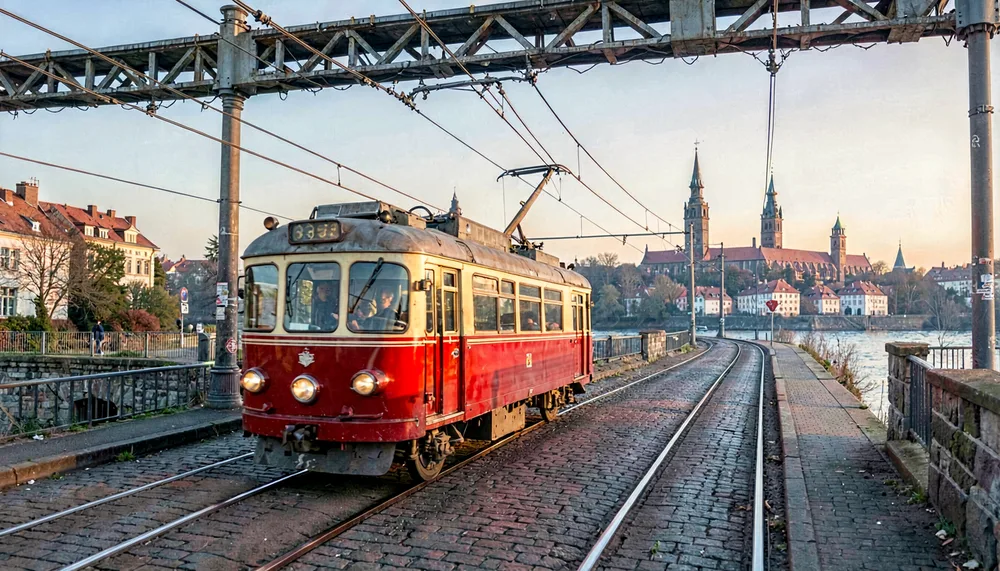
Cheap hotels are cheap for a reason, usually eight kilometres of city between you and everything you came to see. A model plans around that silently: it either walks you for half the day or assumes taxis you never agreed to.
Rule 7 makes it show the sum. Eight kilometres each way on foot is sixteen kilometres, close to four hours of an eight-hour day at the speed we plan with. The metro is eighteen minutes each way. Four hours of programme against seven. Written out like that the decision takes a second; buried in a schedule, it eats the trip.
A document, not a chat thread
The last rule is the one those lists never ask for, and it is the difference between a plan you read and a plan you use. Chat scrolls, chat needs signal, and chat cannot be handed to the person walking beside you.
- Claude creates
.docx,.xlsx,.pptxand PDF directly, with code execution and file creation switched on in settings; you download the file or send it to Google Drive. - ChatGPT builds the file with its code tool and gives you a download link in the answer.
- Gemini exports a response to Google Docs through Share & export, and you download
.docxfrom there.
Get the file onto the phone before you leave, and add the thing the model will not think of: Google's support page for offline maps says that when you are offline, transit, bicycling and walking directions are unavailable — offline navigation is for driving. Your beautifully formatted walking links need data. That is why the document carries street addresses in plain text, and why a screenshot of the timing table beats any file format.
What still breaks, even with all nine lines
This is the section the prompt lists never write. Every item below has cost somebody a morning.
- Search switched off. The model answers from memory and it sounds identical. No source links behind the hours means nothing was verified — check for links before anything else.
- Coordinates for small places drift. Landmarks come out right; a nine-table restaurant can land a block away, sometimes on the wrong side of a busy road. Open each link once at the hotel and look at the pin.
- The sums do not always close on the first pass. Add the blocks up yourself. If they miss, ask for a rebuild rather than accept a quiet fifteen minutes shaved off lunch.
- Queues are invisible to it. No model knows there is forty minutes of security queue at 11:00. Book a timed slot for the one thing you would be sad to miss.
- Places disappear. Refits, sales, a closure announced only on social media. Two fallbacks per food stop is not decoration.
- Weather, strikes and local holidays. It will not know the rain starts at 15:00 or that the district shuts for a saint's day. Search the city's calendar for your date yourself — one minute, and it is the most common way a good plan dies.
Sixty seconds before you leave the hotel
- Open the first map link and check the pin is where you think it is.
- Add up the first three blocks against the clock you actually have.
- Confirm today's hours for the one place the day is built around, on its own site.
- Download the offline area for the city, knowing it will only navigate you by car.
- Screenshot the timing table. A file that needs an app to open is a file you will not open at a crossing.
The same nine rules, other kinds of day
The constraints stay; the shape of the day changes. One day in a city is the base version. Several days from one base adds the rule that stops the model spending every famous sight on day one. A food day adds spacing between meals, because five stops in five hours is a dare. A day with children caps blocks at forty minutes and marks the toilets, which is what really decides that day.
FAQ
Which model should I use for this?
Any of the three will do it. Two switches matter more than the choice: web search on, or the hours come from memory, and the ability to attach a file. Claude creates a Word document directly once code execution and file creation are enabled, ChatGPT builds the file and gives you a download link, and Gemini exports the answer to Google Docs, where you download it.
Do I really have to give the exact date?
Yes, and it is the cheapest line in the prompt. Closing days are weekday-based: the Louvre on Tuesdays, the Musée d'Orsay on Mondays. Public holidays and seasonal rules attach to the date itself, like the reservation requirement the Louvre lists for 1 July to 31 August 2026. Give the date and your arrival time, and the model can catch both instead of guessing.
Why coordinates in map links instead of place names?
Because names are ambiguous and coordinates are not. Chelsea exists in London and in New York; a coffee chain has nine branches within a kilometre. Keep to three waypoints per link as well: Google's Maps URLs documentation allows up to three on mobile browsers and a maximum of nine otherwise, with 2,048 characters for the whole URL. Segments of three work everywhere.
How far ahead should I generate the plan?
Build it whenever you like, then verify the day before you go. Hours checked three weeks out drift: seasonal timetables change, venues close for refits, a holiday moves. Anything that needs booking should be booked the day you generate it. The rest is a ten-minute re-check of the two or three stops the day depends on, on the venues' own sites.
What do I do when it writes "check on site"?
Treat that as the prompt working, not failing. It is the model refusing to invent a number, which is exactly what rule nine asked for. Collect those lines into a list and check them on the venue's own page rather than an aggregator: aggregators copy hours, and copy them late. Usually it is two or three items and ten minutes of your evening.